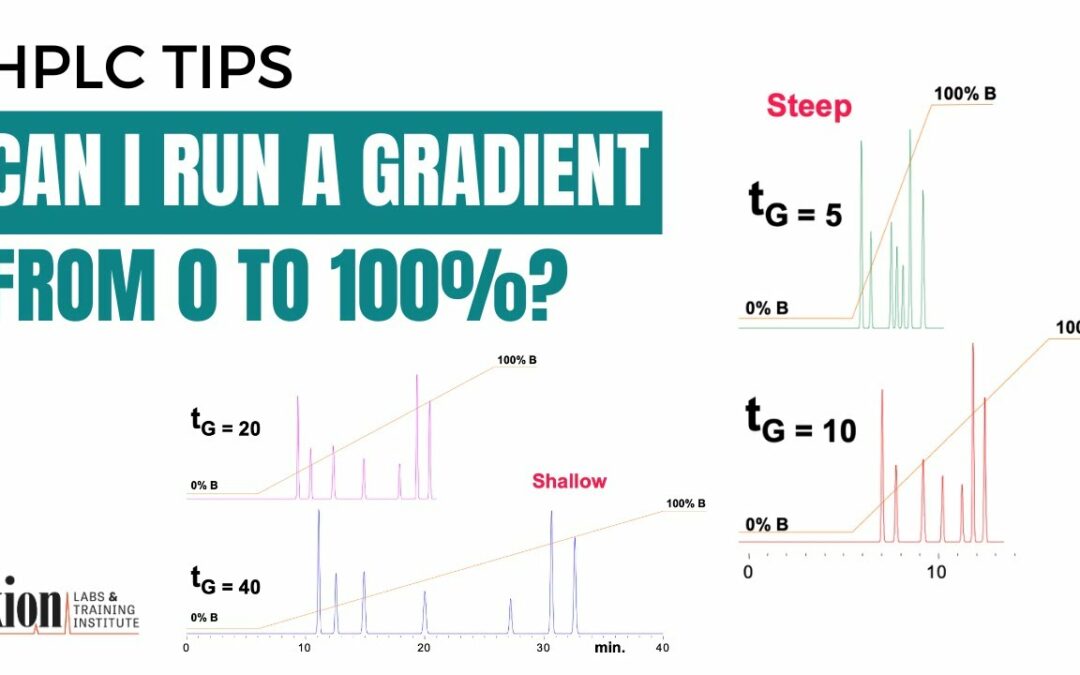
Can I run my instrument from 0 to 100% or do I have to stop at 5 to 95%? So, historically, like when I was a kid, I started doing HPLC in 1980, we were taught to always leave some organic on the column. When you do a gradient, don’t go to 100%; leave a little...
Dwell volume and dead volume can effect your chromatography. What’s the difference between the two? Let me make a couple of clarifications here. Instead of using the term “dead volume,” we prefer the term “extra column volume.” Extra...
In the realm of High Performance Liquid Chromatography (HPLC), the precise measurement of T0, or the time at which solutes elute without interaction with the stationary phase, is fundamental. Let’s discuss T0 and column volumes and explore measurement methods....
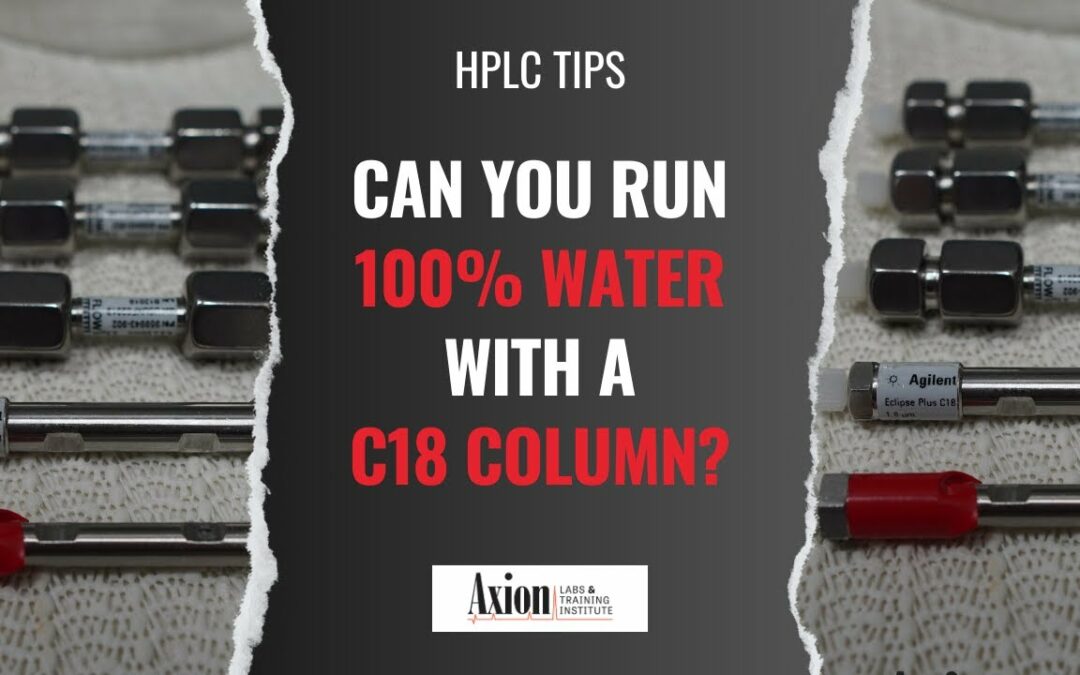
Have you ever wondered if you can run your C18 column with 100% water? Here’s the straightforward answer: We don’t recommend using 100% water with a C18 column. Why do we advise against it. The reason lies in the nature of the C18 itself. Known for its...
Very polar molecules will cause problems if the correct HPLC column is not being used. There’s a specific type of HPLC column for polar molecules. They are known as the polar embedded phase. Currently, every major column company has developed their version of...